
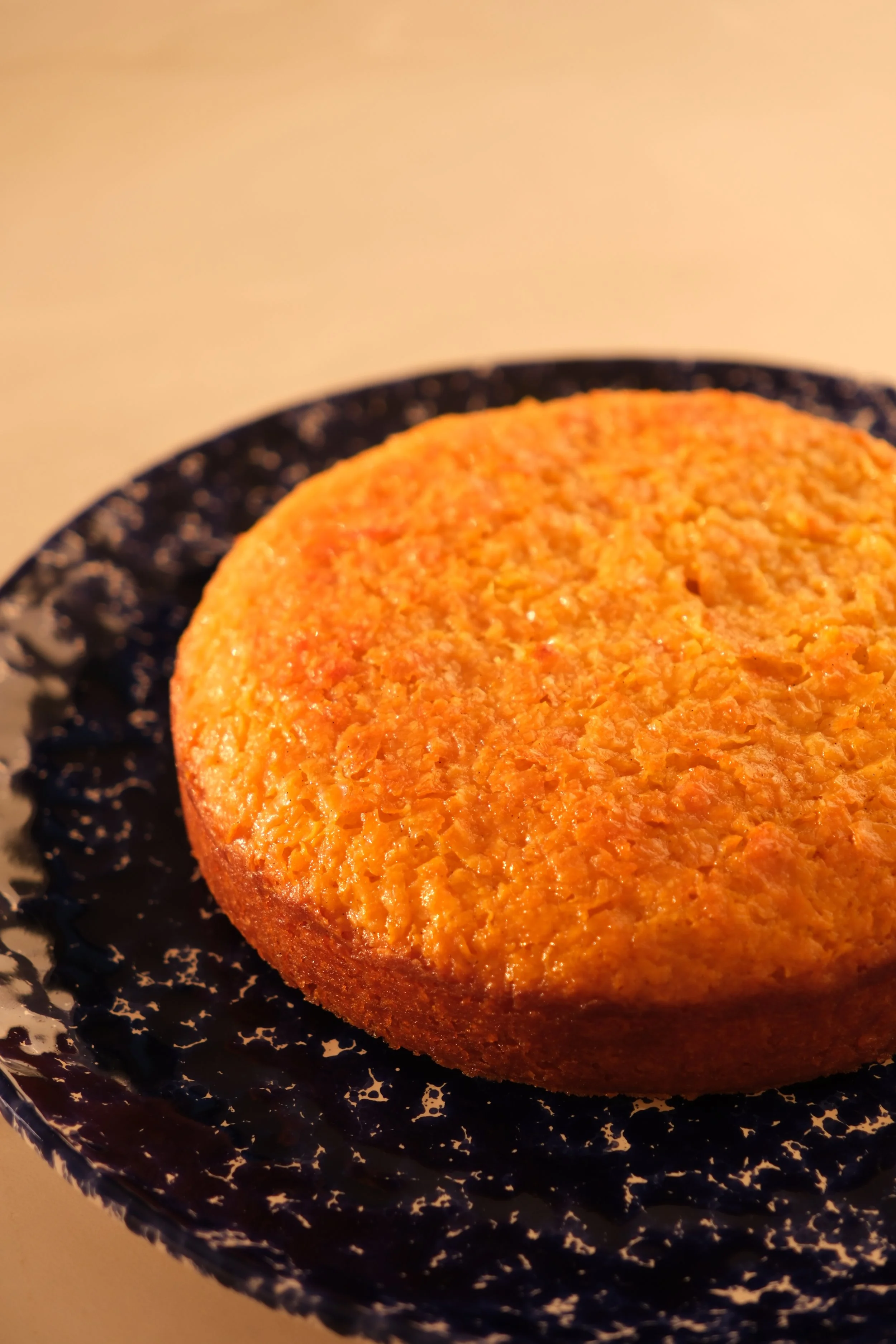
There's a smell that tells me I'm in my yiayia's kitchen before I've even put my bag down. Orange and cinnamon, warm sugar, a pot of syrup on the stove. That's portokalopita, the Greek orange cake I grew up with, and it's still the cake I bring when I want people to feel properly looked after.
Yiayia Eleni makes it the old way. No flour. Instead, you dry sheets of filo in the oven until they shatter, crush them by hand and fold them through an olive oil and yoghurt batter. Once it's baked, the whole cake gets drenched in orange syrup and left overnight to drink it all in. What you end up with sits somewhere between a cake and a pudding: soft, custardy, a little chewy at the edges and soaked right through.
I've added one thing of my own. A whipped Greek yoghurt and mascarpone cream that stays a little tart, piped over the top with crushed pistachios. All that syrup needs something sharp against it, and that contrast is exactly what sends you back for a second piece.
It's a humble cake. It travels well, it gets better after a night in the fridge and it tastes like home to me. Just know going in that this is a two-day cake, so start early.
Why This Portokalopita Works
Dried filo instead of flour. Baking the filo until brittle means it soaks up the batter and then the syrup, which gives portokalopita its dense, custardy texture. Flour can't do that.
Cool syrup, hot cake. The syrup goes on completely cooled so the cake absorbs it slowly and evenly rather than turning soggy.
Olive oil and yoghurt. Together they keep the cake moist for days and bring a gentle tang that stops it from tasting flat.
The overnight rest. This is where the magic happens. The syrup settles all the way through and the cake firms up enough to slice cleanly.
Strained yoghurt in the cream. Draining the yoghurt overnight makes it thick enough to pipe while keeping all its tartness.
The Flavours
Orange does a lot of work here: zest in the batter, juice in the batter and syrup, and more zest through the cream. Yiayia's tip is to use large oranges for zesting and small ones for juicing, because the small ones tend to be juicier. A piece of cinnamon bark and a strip of lemon rind go into the syrup, giving it warmth and a little brightness. Pistachios on top add crunch and colour.
How to Serve Portokalopita
Cut into squares or wedges with Greek coffee in the afternoon.
Make it the day before a long lunch so dessert is already done.
Take it whenever you're asked to bring a plate. It travels beautifully.
Serve it cold from the fridge on a hot day. It's even better that way.
For a nut-free version, swap the pistachios for toasted sesame seeds.
However you serve it, cut generous pieces. Nobody ever stops at one.
Frequently asked questions
-
Portokalopita is a Greek orange cake made with crushed, dried filo pastry instead of flour, soaked in an orange syrup after baking. The filo absorbs the batter and syrup, giving portokalopita a moist, custardy texture that's quite different from a regular sponge. It's a classic in Greek home kitchens and is often made for family gatherings and celebrations.
-
Yes, drying the filo is the most important step in portokalopita. Fresh filo turns gummy in the batter, while dried filo crushes into flakes that soak up liquid evenly. Scrunch the sheets loosely onto a tray and bake for 15 to 20 minutes, tossing once or twice, until brittle and lightly golden. Let it cool completely before crushing.
-
Yes, portokalopita needs to be made ahead. The cake must rest overnight in the fridge after the syrup goes on, and the yoghurt for the cream drains overnight too, so start two days before you plan to serve it. Pipe the cream on just before serving so it stays neat.
-
Portokalopita keeps for 4 to 5 days in an airtight container in the fridge, and the texture improves after the first day. Once the cream is on, it's best eaten within 2 to 3 days. You can also freeze the syrup-soaked cake without the cream for up to a month. Thaw it overnight in the fridge, then add the cream and pistachios.
Yiayia Eleni's Portokalopita
Serves 8–10 · Prep 1 hour, plus overnight draining and chilling · Cook 1 hour 15 minutes
Ingredients
For the tin
Softened butter, for greasing
Fine semolina, for dusting
For the cake
375 g filo pastry
4 eggs
1 cup (220 g) caster sugar
1 cup (250 ml) mild light olive oil
½ cup (125 ml) fresh orange juice
1 cup (280 g) Greek yoghurt
Finely grated zest of 2 oranges
1 tsp vanilla bean paste
2 tsp baking powder
For the orange syrup
1 cup (250 ml) fresh orange juice
1½ cups (330 g) caster sugar
1 cup (250 ml) water
1 tsp vanilla bean paste
1 piece cinnamon cassia bark
1 strip lemon rind (about ¼ lemon)
For the orange-yoghurt cream
500 g Greek yoghurt (to yield approximately 250 g drained)
250 g mascarpone
60 g icing sugar
1 tsp vanilla bean paste
Finely grated zest of 1 orange
Pinch of fine salt
Crushed pistachios, to garnish
Method
The day before baking, place the yoghurt for the cream in muslin and hang over a bowl in the fridge overnight to drain until very thick. You need approximately 250 g drained yoghurt.
Preheat the oven to 170°C (150°C fan-forced). Line the base of a 25 cm springform tin with baking paper. Grease the sides with softened butter and dust with fine semolina.
Scrunch the filo sheets loosely onto a large baking tray and bake for 15–20 minutes, tossing once or twice, until brittle and lightly golden. Cool, then crush by hand into fine flakes.
For the syrup, combine all the syrup ingredients in a saucepan. Bring to the boil, stirring to dissolve the sugar, and boil for 5 minutes. Remove from the heat and cool completely, then discard the cinnamon bark and lemon rind.
Using an electric mixer, whip the eggs and caster sugar until pale and fluffy. Whisk in the olive oil, orange juice, yoghurt, orange zest, vanilla bean paste and baking powder, one at a time.
Fold the crushed filo into the batter in small handfuls, mixing gently to avoid clumps. Pour into the tin.
Bake on the middle rack for 40–50 minutes, until golden and a skewer inserted in the centre comes out clean (or the centre reads 96–98°C). Cover loosely with foil if it browns too quickly.
Poke holes all over the hot cake with a skewer and slowly pour over the cooled syrup, letting it soak in. Refrigerate overnight in the tin.
Whisk the strained yoghurt, mascarpone, icing sugar, vanilla, orange zest and salt together. Transfer to a piping bag fitted with a large tip, such as a Wilton 789.
Remove the cake from the tin and transfer to a serving plate. Pipe the cream over in wavy ribbons and finish with crushed pistachios.
Recipe Notes
Storage: keep in an airtight container in the fridge for 4–5 days, or 2–3 days once the cream is on. The syrup-soaked cake (without cream) freezes for up to 1 month. Thaw overnight in the fridge.
Nut-free: omit the pistachios and finish with toasted sesame seeds.
Softened cream cheese can replace the mascarpone in the cream.