
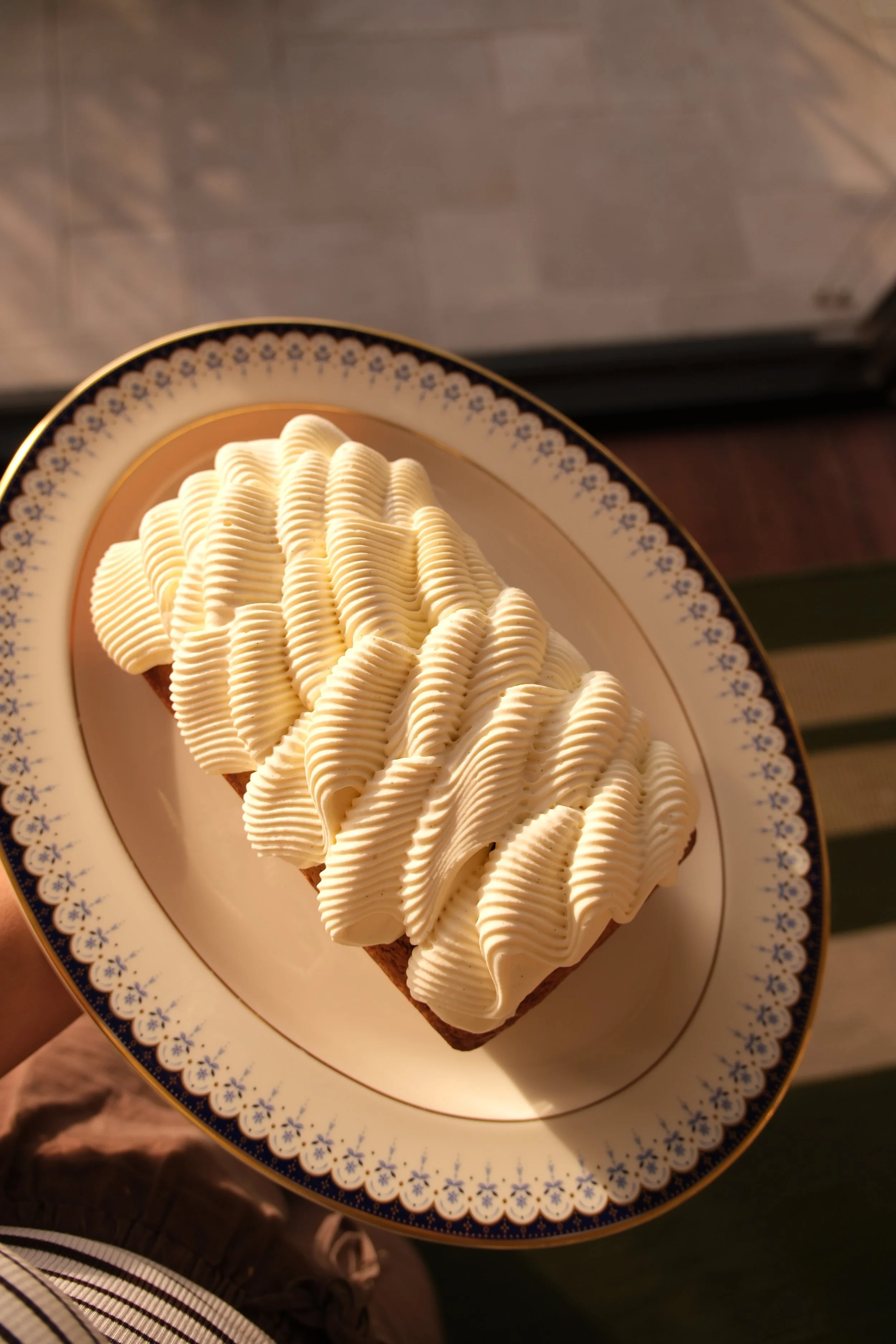
Every home baker needs one cake they can make without thinking. Not a showstopper, just a reliable loaf you can pull together on a Sunday, slice all week and change up depending on what's in the fruit bowl. This olive oil yoghurt loaf cake is mine.
It took a few rounds to get right. My first version was too thin and spongy, more like a light sponge than the rich, tender loaf I was after. So I scaled it up to properly fill the tin, changed the order I mix things and stopped trying to beat air into it. The result is a cake that's moist, plush and close-crumbed, the kind that's still good three days later.
Then there's the cream. Mascarpone whipped with cold thickened cream, vanilla and a pinch of salt. The salt is small but it does a lot of work, taking the edge off the sweetness so the whole thing tastes more grown-up.
Think of this as your base. Make it plain the first time, then start playing.
Why This Loaf Cake Works
Olive oil and Greek yoghurt. Oil keeps the crumb moist for days, and full-fat yoghurt adds richness and a gentle tang.
A little almond flour. It makes the crumb more tender and gives a subtle nutty depth.
Yoghurt and oil first. Whisking these together before adding the eggs and sugar stops the yoghurt from going lumpy and keeps the batter smooth.
No overmixing. You're not trying to whip in air. Mixing just until smooth gives you a rich, tender cake instead of a dry, airy one.
Low and slow. A moderate oven lets the centre cook through before the outside overbrowns.
How to Flavour Your Base Loaf
This recipe is designed to be built on. As a rough guide:
Easy additions (no changes needed): citrus zest, spices like cinnamon or cardamom, chopped nuts, chocolate chips.
Moderate additions (go gently): berries, a swirl of jam, grated vegetables like zucchini or carrot.
Big changes (may need recipe tweaks): fruit purées, banana, pumpkin or cocoa. These add moisture or dryness, so you'll often need to adjust the yoghurt or flour.
Start with one change at a time so you know what's working.
How to Serve It
Thick slices with the mascarpone cream and a cup of tea in the afternoon.
Plain and toasted the next morning with a little butter.
With fresh berries or stone fruit piled on top of the cream in summer.
As an easy dessert for friends, made the day before.
Bake it once and it'll become your Sunday ritual.
Frequently asked questions
-
Yes, this olive oil yoghurt loaf cake freezes well without the cream. Wrap the cooled loaf (whole or sliced) tightly in baking paper and foil, and freeze for up to 3 months. Thaw at room temperature, then whip the mascarpone cream fresh. The cream itself doesn't freeze well, so make it on the day.
-
Un-iced, the olive oil yoghurt loaf cake keeps for 3 to 4 days in an airtight container at room temperature. Once topped with the mascarpone cream, store it in the fridge and eat within 3 days. Let refrigerated slices sit out for 15 minutes before serving for the best texture.
-
Your loaf cake is cooked when a skewer inserted in the centre comes out clean or with a few moist crumbs, never raw batter. Start checking at 55 minutes, as ovens vary and this is a full loaf that can take up to 80 minutes. If the top browns too quickly, tent it loosely with foil and keep baking.
-
Yes, this loaf cake is designed as a base you can flavour. Zest, spices, nuts and chocolate can go straight in without changes. Berries, jam or grated vegetables work well in moderation, while wetter or heavier additions like banana, pumpkin or cocoa may need an adjustment to the yoghurt or flour.
Olive Oil Yoghurt Loaf Cake with Salted Vanilla Mascarpone Cream
Serves 10–12 slices · Prep 25 minutes, plus cooling · Cook 60–80 minutes
Ingredients
For the loaf
300 g plain flour
75 g almond flour (finely ground, blanched)
9 g baking powder
3 g bicarbonate of soda
4.5 g fine sea salt
300 g full-fat Greek yoghurt
165 g mild extra virgin olive oil
3 large eggs (about 150 g without shells)
180 g caster sugar
90 g light brown sugar
7.5 g vanilla extract
For the salted vanilla mascarpone cream
250 g mascarpone, chilled
35 g icing sugar
1 tsp vanilla bean paste or vanilla extract
⅛ tsp fine sea salt, plus extra to taste
300 ml thickened cream, cold
Method
Preheat the oven to 170°C (150°C fan-forced). Grease and line a 23 × 13 cm loaf tin with baking paper.
In a large bowl, whisk the Greek yoghurt and olive oil until smooth and fully combined.
Whisk in the eggs one at a time, then add the caster sugar, brown sugar and vanilla. Mix only until smooth, without whipping in extra air.
In another bowl, whisk together the plain flour, almond flour, baking powder, bicarbonate of soda and salt.
Gently fold the dry ingredients into the wet mixture until there are no flour pockets. Don't overmix.
Pour into the tin and level the top. Bake for 60–80 minutes, checking from 55 minutes, until a skewer comes out clean or with a few moist crumbs. Tent loosely with foil if the top browns too quickly.
Rest in the tin for 15 minutes, then lift onto a rack and cool completely before topping.
For the cream, gently whisk the mascarpone, icing sugar, vanilla and salt in a stand mixer until smooth.
With the mixer on low, slowly pour in the cold cream. Increase the speed and whip until thick and fluffy with peaks that hold for piping. Stop as soon as it gets there, as it can split if overwhipped.
Taste and adjust the salt. Pipe or spread generously over the cooled cake. A large tip like a Wilton 789 makes wide ribbons.
Recipe Notes
Storage: un-iced, keep in an airtight container at room temperature for 3–4 days. Once topped with cream, refrigerate and eat within 3 days. The un-iced loaf freezes for up to 3 months.
Make the cream on the day you serve it. It doesn't freeze well.