
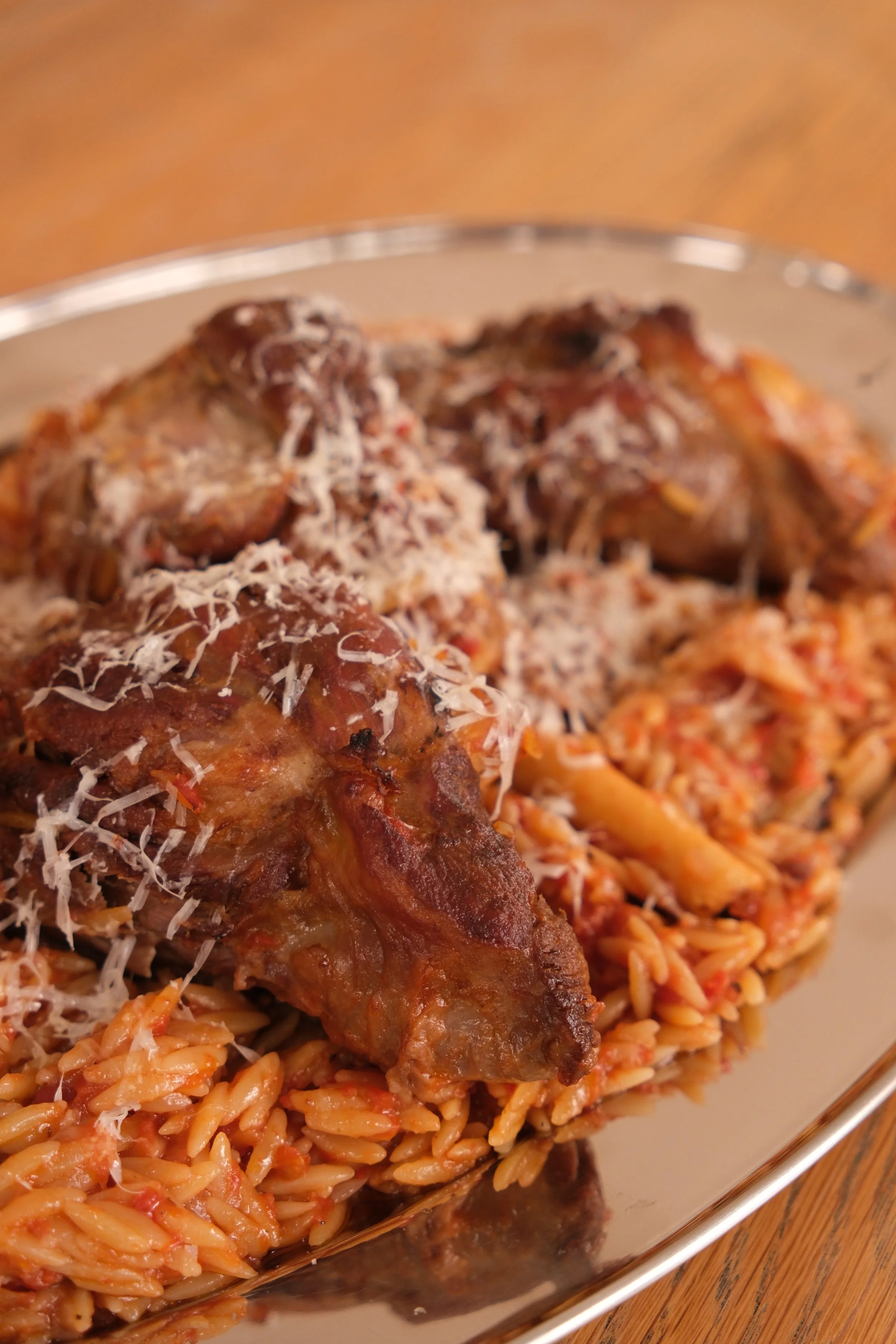
For years, I had no idea I’d been eating youvetsi.
My yiayia makes this dish on rotation, but in our family, we’ve always just called it kritharaki. So when people mentioned youvetsi, I had no idea what they were talking about. Turns out, it was a dish I knew very well.
Lamb that melts in your mouth, a rich tomato sauce and little pieces of pasta that soak up all that flavour. Simple flavours, done well.
Kritharaki is the rice-shaped pasta you might also know as orzo. In this recipe, it cooks in the sauce with the lamb, taking on all the flavour from the pot.
A little inspiration from Greece
On my recent travels in Greece, I took my Savour the Slow retreat guests out for a meal, and this was the dish they immediately wanted the recipe for. I understood why. It’s generous, comforting food that makes you want to put the whole pot on the table and let everyone help themselves.
Sharing food is such a big part of why I love hosting these retreats. And there’s something lovely about being away with a group of women, sharing a dish that feels so familiar to me through my own family, and watching them fall in love with it too.
This version is adapted from my yiayia’s recipe, using lamb shanks cooked until the meat comes away easily from the bone. When we went through her method, it came back to a few simple ingredients: onion, garlic, tomato paste, fresh tomatoes, cinnamon and bay. Give them time to cook properly and you have the beginnings of a very good meal.
Her biggest tip? Always use fresh tomatoes, grated. Never canned.
Grate the tomatoes with a box grater, leaving the skins behind. All that pulp and juice goes into the pot.
The other thing to get right is the texture. I like this soft and saucy, with the kritharaki sitting somewhere between a stew and a risotto. Bring it to the table while it’s still lovely and loose, because the pasta keeps soaking up the sauce as it sits
Lamb shank youvetsi recipe
Slow-cooked lamb shanks with fresh grated tomatoes, cinnamon, bay and kritharaki.
Serves: 4
Oven: 170°C fan-forced
Braising time: approximately 1 hour 45 minutes–2 hours, or longer until the lamb is very tender
Pasta cooking time: approximately 15–20 minutes
Resting time: 5 minutes
Allow additional time to prepare the ingredients, brown the lamb and cook the sauce.
Ingredients
4 lamb shanks, approximately 350–450 g each
Sea salt and freshly cracked black pepper
3 tablespoons olive oil
1 brown onion, finely chopped
4 garlic cloves, finely chopped
3 tablespoons tomato paste
100 ml red wine
600 g fresh ripe tomatoes, grated, skins discarded
1 cinnamon stick (I use bark)
1 bay leaf
500 ml hot water for the braise, plus extra as needed
300 g kritharaki or orzo, uncooked
500 ml hot water for the pasta, with another 100–200 ml available if needed
Method
Prepare the lamb. Preheat the oven to 170°C fan-forced. Pat the lamb shanks dry and season well with salt and pepper.
Brown the shanks. Heat the olive oil in a large, heavy, ovenproof casserole dish over medium-high heat. Brown the shanks on all sides, working in batches if needed. Transfer to a plate.
Build the sauce. Reduce the heat to medium. Add the onion to the same pot and cook until softened and translucent. Add the garlic and stir until fragrant, then add the tomato paste. Cook, stirring, until the paste darkens slightly.
Add the wine and tomatoes. Pour in the red wine, scraping up the browned bits from the base of the pot. Let it bubble and reduce, then add the grated tomatoes and their juices, cinnamon stick and bay leaf. Cook, stirring occasionally, until the tomatoes have cooked down and the sauce has deepened in colour.
Braise the lamb. Stir in the first 500 ml hot water and bring to a simmer. Return the shanks and any resting juices to the pot. The liquid should come partway up the meat. Cover tightly and transfer to the oven for approximately 1 hour 45 minutes–2 hours, checking the liquid during cooking and adding a little extra hot water if needed. The lamb should yield easily to a fork and be coming away from the bone. If it is still firm, continue cooking, covered, before adding the pasta.
Add the kritharaki. Carefully lift the tender shanks onto a plate. Remove the cinnamon stick and bay leaf. Taste the sauce and adjust the seasoning. Stir in the uncooked kritharaki and the second 500 ml hot water, then nestle the shanks back into the pot. Make sure the pasta is sitting in the liquid.
Finish in the oven. Return to the oven, uncovered, at 170°C fan-forced, for approximately 15–20 minutes, or until the pasta is just tender. Gently stir the pasta around the shanks halfway through, reaching the bottom of the pot. Check the liquid as it cooks, adding a little of the extra hot water if the pasta is absorbing the sauce before it is tender. The finished dish should still look loose and saucy.
Rest and serve. Rest for 5 minutes, then serve while the kritharaki is still soft and glossy and the lamb pulls easily from the bone.
Cooking notes
Let the lamb become tender first. Shank size and your cooking dish can affect the time needed. Add the pasta once the lamb is ready.
Watch the sauce as the pasta cooks. Fresh tomatoes, evaporation and different brands of kritharaki can change how much water you need. Keep some hot water nearby for small adjustments.
Serve soon after resting. The pasta continues to absorb liquid as it sits. If it becomes too thick, gently loosen it with a splash of hot water.
Serving suggestion: A little grated kefalotyri over each bowl.